
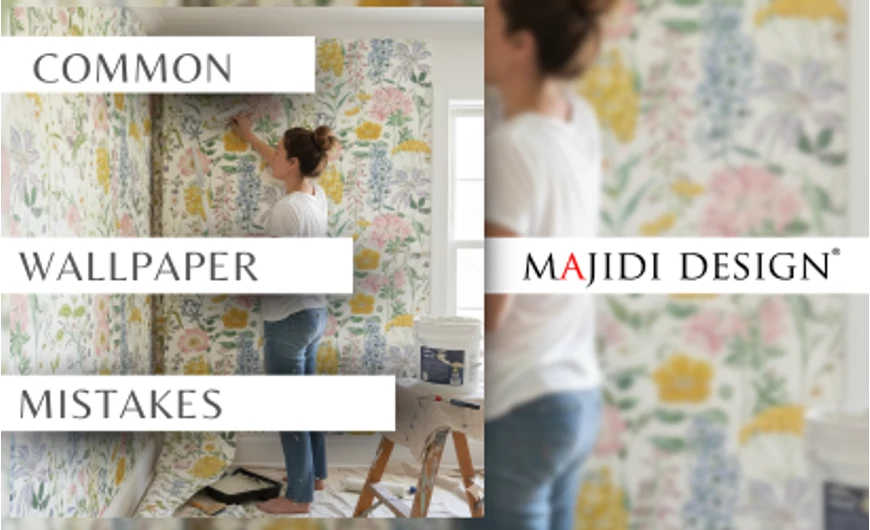
Most wallpaper mistakes don’t start with the wallpaper – they start with the wall
This is the point most people rush through. The wall seems “mostly fine,” with no visible damage, so the wallpaper can go up. But wallpaper doesn’t forgive. A slightly uneven surface, an old filler mark, or a dusty patch will be much more noticeable after drying than you might expect.
Before wallpapering, it’s worth taking the time to make sure the wall is truly smooth, clean, and even. It may not be a flashy task, but it determines whether the final result looks “DIY” or “professional.”
“This adhesive works for everything” – or does it?
One of the most important wallpapering tips is choosing the right adhesive, yet many people get it wrong. Paper, vinyl, and non-woven wallpapers all behave differently on the wall. What works perfectly for one may not be enough for another.
If the edges of your wallpaper start peeling after a few days, it’s often not the wallpaper’s fault – it’s the adhesive. A well-chosen, correctly mixed adhesive not only makes application easier but also ensures long-term stability.
The pattern that “shifted just a little”
This is a mistake that’s easy to overlook during wallpapering. The patterns almost match, the misalignment barely noticeable… until the wallpaper dries and the light hits it from a different angle.
For patterned wallpaper, one of the most important wallpapering tips is planning ahead. Pattern alignment takes more time and material, but the result is much more harmonious. Well-aligned wallpaper “blends” into the space – misaligned, it constantly draws attention.
Why the starting point matters
Most walls aren’t perfectly straight, even if they appear to be. Starting from a slanted corner can accumulate misalignment strip by strip, making the pattern visibly crooked in the end.
This is why professionals always use a plumb line or level. A perfectly aligned first strip ensures the wallpaper “holds itself” throughout, even if the wall isn’t perfectly regular.
Bubbles, waves – and a lack of patience
Few things are more frustrating than bubbles appearing on freshly applied wallpaper. Many panic, press too hard, or try to remove the strip – often causing more harm than good.
The key is calm, gradual smoothing, always working from the center out. Wallpaper is still “working” while fresh, and many minor imperfections disappear as it dries.
Drying is part of wallpapering
Wallpapering doesn’t end with the last strip applied. Too rapid drying – drafts, strong heating, open windows – can cause wallpaper issues just like poor preparation.
Ideally, wallpaper dries in a calm environment at a consistent temperature. This helps prevent alignment gaps and material shrinkage.
A small saving that causes big trouble later
Perhaps the most common, yet most annoying mistake: ordering too little wallpaper. When you need to replace it later, it often comes from a different production batch, with slight color variations.
At first, it may barely be noticeable – but once applied, it definitely is.
Conclusion: good wallpapering is not about rushing
Most wallpaper mistakes don’t happen because someone “doesn’t know how,” but because they try to finish too quickly. Well-executed wallpapering requires time, attention, and care.
By keeping these wallpapering tips in mind, wallpaper becomes not just decoration, but one of the strongest yet most natural elements of a space.